Cathodic electrocoating is a water-based painting process that applies a layer to the body. Before we dive into the world of CED coating and CED coating plants, let’s get something clear: this is not one of those “revolutionary” tech stories packed with superlatives.
Instead, you’re getting a hands-on, no-frills explanation suitable for anyone curious about what CED actually is, why Indian manufacturers care, and how the industry plays out here today.
What is Cathodic Electro Deposition (CED) Coating?
Cathodic Electro Deposition coating is a process of applying corrosion-resistant coating to metal surfaces. Think of it as painting with electricity, where parts are dipped into a bath of special paint and then an electric current causes the paint to deposit evenly all over the component. The real kicker for manufacturers? This method covers every nook and cranny, even spaces that a brush or spray gun just cannot reach.
CED coating isn’t new; automotive and industrial companies have relied on it for decades because it’s cost-effective, fast, and reliable. The coating itself is water-based, and the process is environmentally friendly compared to older solvent-based paints. In India, you’ll see CED used in car and bike parts, bus bodies, tractors, furniture, electrical enclosures, and even household products.
How CED Coating Works
Here is the process of how CED coating works:
- Pretreatment: Metal components go through cleaning. Usually, there’s a multi-stage chemical wash, including degreasing and phosphating, to remove oil, dirt, and rust.
- Bath time: Rubber gloves on, the dipped parts are sent down a tank. With water-based paint inside and an admixture of various, perhaps hazardous chemicals, this tank is a real horror show. Electric current (usually D.C.) flows through the liquid in the tank.
- Deposition: The parts hop into the tank and are negatively charged (cathode). They attract paint particles, which stick on them until a thin coating is formed as protection against rust.
- Rinsing: Water is sprayed over the paintwork and flows off, keeping the layer uniform.
- Curing: Products are then fed into an oven where they are baked at about 160° C—180° C until the film hardens and becomes lustrous.
Why CED Coating Is Popular in India
India’s manufacturing scene has some pretty clear reasons for sticking with CED:
- Uniform Coverage: Every spot gets coated, which is vital for parts that need full rust protection.
- Low-cost: Compared to some traditional plastic or powder coatings, the savings can be quite large indeed – particularly in high-volume production runs where even small percentages add up fast to big money over time.
- Environment Ping: Reduce smoke from water-based paints and closed-loop systems, which means less pollution. This approach is highly in tune with trends towards stricter environmental regulations and requirements for worker safety.
- Adaptability: Thickness can range from a fraction of a millimetre up to 90% of the chassis ‘logs’ traditional coatings can’t do this. When used on fasteners, CED is unnoticeable by contrast with varnishes or other adhesives.
Tata Motors, Mahindra & Mahindra, Maruti Suzuki, Ashok Leyland and TVS Motor are visible using CED around India in their automotive processes. Many parts manufacturers also set up their own facilities throughout the country, and in Pune, Chennai or Gurgaon, they have a concentrated presence of job coaters specialising exclusively in coatings.
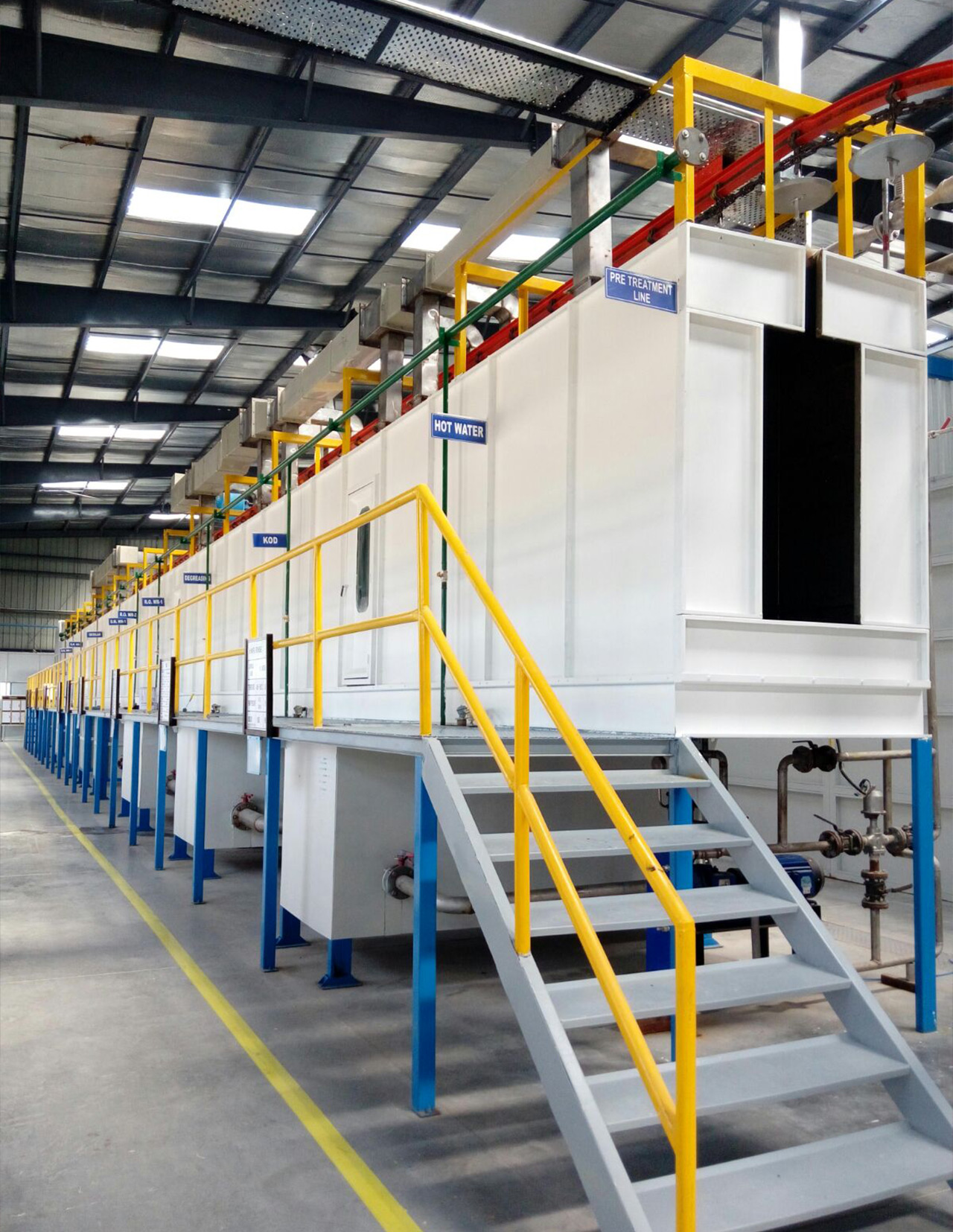
Typical Setup of a CED Coating Plant
If you’re thinking about the infrastructure needed for CED, here’s what a standard Indian plant includes:
- Process Tanks: These hold the cleaning chemicals, phosphate solution, paint bath, and rinse water. Stainless steel is the usual choice.
- Conveyor System: Automated lines carry parts through different stages. Some plants use manual setups for smaller batches.
- Power Supply: Provides the controlled direct current required by the arc to deposit metal.
- Paint Oven: Ovens used for baking and curing paint can be powered by LPG, electricity, or diesel fuel, depending on local availability. Most major manufacturers don’t need this equipment; they operate off-site laboratories to handle second-phase development, particularly since it requires special safety procedures that are too difficult for shops without expertise in these matters
- Water Treatment Plants: These are needed for recycling rinse water and to comply with pollution control laws. The latest ovens can handle anywhere from 5,000 to 30,000 parts a day and are designed to accommodate the size and production speed of each part. Many job coaters sell services to industries that cannot afford their own full-blown plants.
Conclusion
To wrap up: CED coating and CED coating plants are the backbone of Indian automotive and engineering manufacturing, delivering reliable, eco-friendly corrosion protection at scale. Big brands use this tech not just because it’s the norm worldwide, but because it’s practical for our climate, cost structures, and regulatory setup.
Whether you’re searching for job coaters for your business, planning to build your own plant, or just curious about the industry, real data from India’s official plant builders and manufacturers tells a straightforward story: CED isn’t fancy, but it’s essential here. When you look up suppliers, always double-check the numbers and certifications on their websites; they’re usually right upfront about capacity, compliance, and service details.